
Our approach to Passivhaus: Insulation and the long-term health of a building
Approx 8 min read
PART 3
Insulation
“Insulation is not just about hitting a U-value. It is about compatibility, durability and what the building is actually made from.”
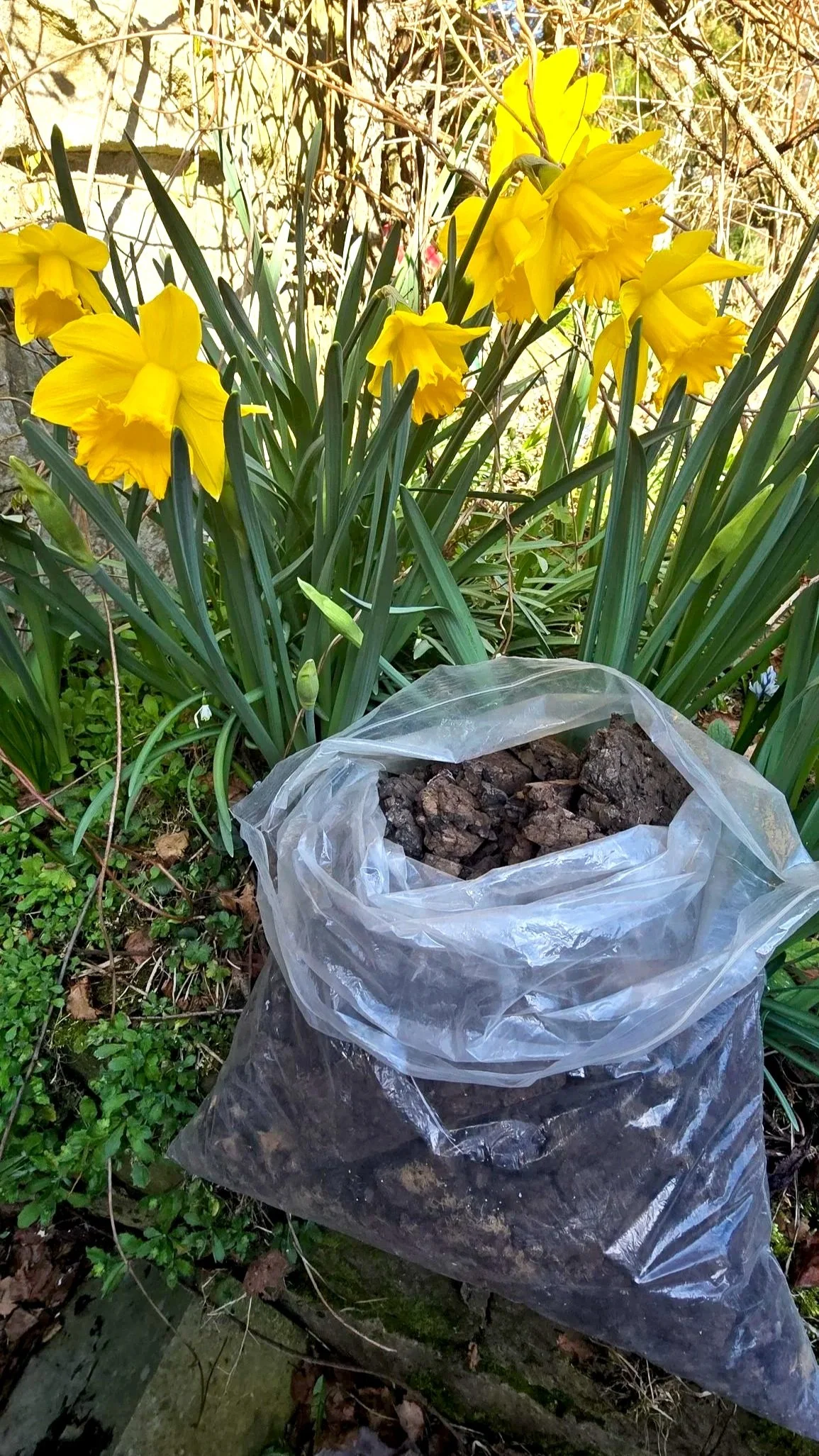
(This image shows cork insulation offcuts collected from site and stored for reuse. Rather than going to waste, these pieces can be repurposed in a number of practical ways - from packing out insulation gaps, to being granulated for use as a lightweight insulating aggregate within lime plasters, or even incorporated into plant pots to improve drainage, moisture management and soil aeration. Cork is a remarkably versatile material, and with a bit of thought, very little needs to be thrown away)
So far in this series, we’ve covered the foundations, literally, and explored how smart decisions there, and within the structure itself, allow elements of the building to serve multiple purposes and deliver multiple benefits.
We’ll close the series by looking at insulation, and how the decisions we make here ultimately shape not just energy performance, but the long-term character, comfort and resilience of the building itself.
Passivhaus can be achieved in a number of ways. There are several routes to meeting the energy targets and, from a purely performance-based perspective, many of them work. The Passivhaus modelling process allows us to weigh those options up properly, using a fully integrated model to test decisions in relation to energy demand, moisture risk and budget. It removes guesswork and helps ensure nothing important is left to assumption.
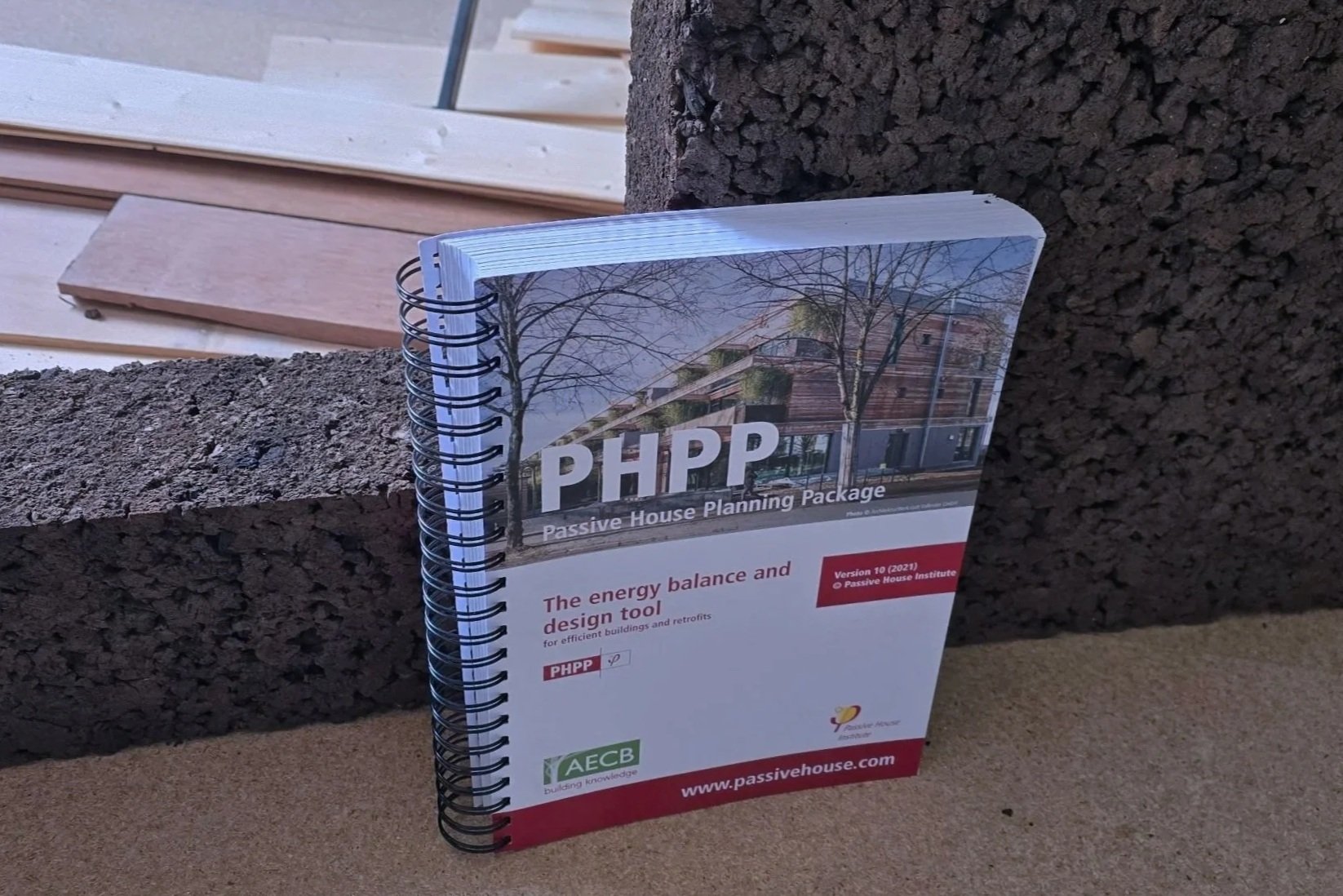
A cut slab of 100mm cork supporting the substantial PHPP manual!
But meeting the numbers is only part of the story.
Different approaches may satisfy the energy requirements on paper, yet the environmental impact, material health and long-term behaviour of the building can vary enormously depending on what is chosen. Even with detailed modelling, a performance gap can still emerge if materials are poorly considered or badly installed.
There are also factors that modelling cannot fully capture: how materials behave on site, how forgiving they are to work with, how they interact with the structure over time, and what happens at the end of a building’s life. The experience of building with a material directly influences quality, and quality ultimately influences performance.
That is why insulation is not just about hitting a U-value. It is about compatibility, durability and what the building is actually made from.
Because insulation is never just insulation.
More than thermal resistance
Some insulation materials are primarily resistive in how they perform thermally. Others also bring density, thermal mass and moisture-buffering qualities.
Materials such as woodfibre or hemp can absorb heat and release it more gradually, helping to moderate internal temperatures and reduce peaks and troughs. PIR, by contrast, can achieve strong thermal resistance within a relatively thin build-up, but it behaves very differently in practice. From a calculation perspective, both can help meet a target. In reality, their wider characteristics are not the same.
This distinction matters.
A wall or roof build-up is not simply a stack of products selected to satisfy a spreadsheet. It is a living assembly of materials, each with its own properties, tolerances and behaviours. Once built, those materials have to work together over decades, through seasonal changes, moisture movement, installation tolerances and everyday use.
For us, the question is not simply, “How well does this insulate?” It is also: how does it behave, what else does it contribute, and how well does it belong within the wider fabric of the building?
Compatibility matters
Compatibility is critical, particularly in timber construction.
A timber frame will move. It responds to changes in humidity and temperature over time. We therefore want insulation that can move and respond with it, rather than something rigid and unforgiving that risks creating tension within the build-up. Materials should be working together, not against one another.
This is one of the reasons we advocate for vapour-open construction. We generally want the building fabric to become progressively more breathable as it moves towards the outside. There is a common perception that Passivhaus results in a sealed box, but airtightness and vapour permeability are not the same thing.
Airtightness controls uncontrolled heat loss.
Vapour permeability allows moisture to migrate safely through the structure.
Those two ideas are often confused, but they perform very different roles. A well-designed Passivhaus building should be airtight, yes, but that does not mean it should trap moisture within its fabric.
From the outset, we do not believe it is realistic to assume moisture will never enter a building assembly over its lifetime. Instead, we design around what happens when it does. How can it dry? Where can that moisture go? How can the materials within the build-up help manage that risk rather than intensify it?
Natural, hygroscopic materials can absorb and release moisture, helping to buffer internal humidity and protect the structure. But they must still be detailed properly. An internal airtight layer remains essential to protect the fabric, and if natural materials are damaged or repeatedly saturated, they will not perform as intended. Good design and careful installation remain fundamental regardless of the material chosen.
Looking beyond the headline figure
It is entirely possible to achieve Passivhaus using high-performance petrochemical foams. From a purely thermal perspective, they can work very well. They are often cheaper, thinner and widely available. If the only question is, “Does it meet the target?”, the answer may well be yes.
But once we widen the lens to embodied carbon, indoor air quality, fire performance, waste, installation quality and end-of-life, the conversation becomes more nuanced.
For us, insulation should do more than one job.
Hemp, for example, performs exceptionally well in managing moisture through capillary action. Woodfibre offers thermal mass as well as insulation. Cellulose can fill voids thoroughly while also supporting a hygroscopic, vapour-open build-up. These materials do more than simply resist heat flow, and that additional value is not fully captured by a U-value calculation alone.
That is where design judgment still matters.
Because building well is not just about satisfying a metric. It is about understanding what those materials are likely to do in reality, on site and over time.
The human side of insulation
There is also a wider consideration that is rarely discussed enough: the people installing these materials.
The experience of working with insulation matters. Ease of handling, the time required for installation, the quality of fit achieved on site, and the type and volume of waste produced all influence final build quality.
In our experience, introducing teams to natural insulation can be transformative. The difference in handling is significant. These materials are often more pleasant to work with, more forgiving during installation, and gentler on both the people using them and the surrounding environment.
Natalie’s first attempt at installing IndiNature Hemp insulation batts at Jordan’s renovation project.
That matters more than it might first appear.
A material that is awkward, brittle or unpleasant to install is more likely to be cut poorly, fitted carelessly or worked around rather than with. Every one of those compromises can affect real-world performance. A product may look excellent in a technical datasheet but still underperform in practice if it is difficult to install consistently and well.
By contrast, when builders understand a material, trust it and find it straightforward to work with, quality tends to improve. Better workmanship is not separate from building performance. It is one of the key ingredients of it.
Waste matters too. Where there are offcuts from natural insulation products, there may be reuse potential. When a building is eventually dismantled, its fabric may be able to re-enter material cycles rather than going straight to landfill. By contrast, rigid petrochemical insulation can be less forgiving to install, offcuts often have little reuse potential, and at end of life these materials rarely have a meaningful second use.
In the drive to maximise thermal performance within the thinnest possible build-up, the industry has at times leaned towards heavily processed materials that can come with wider trade-offs. These details may appear small in isolation, but together they shape the long-term impact and lived experience of a building.
Natural materials in practice
Working with natural materials is noticeably different. They tend to be more pleasant to handle, more forgiving, and more compatible with timber structures. Sometimes hesitation comes simply from lack of familiarity, but in our experience, once people have worked with them, they rarely want to revert without good reason.
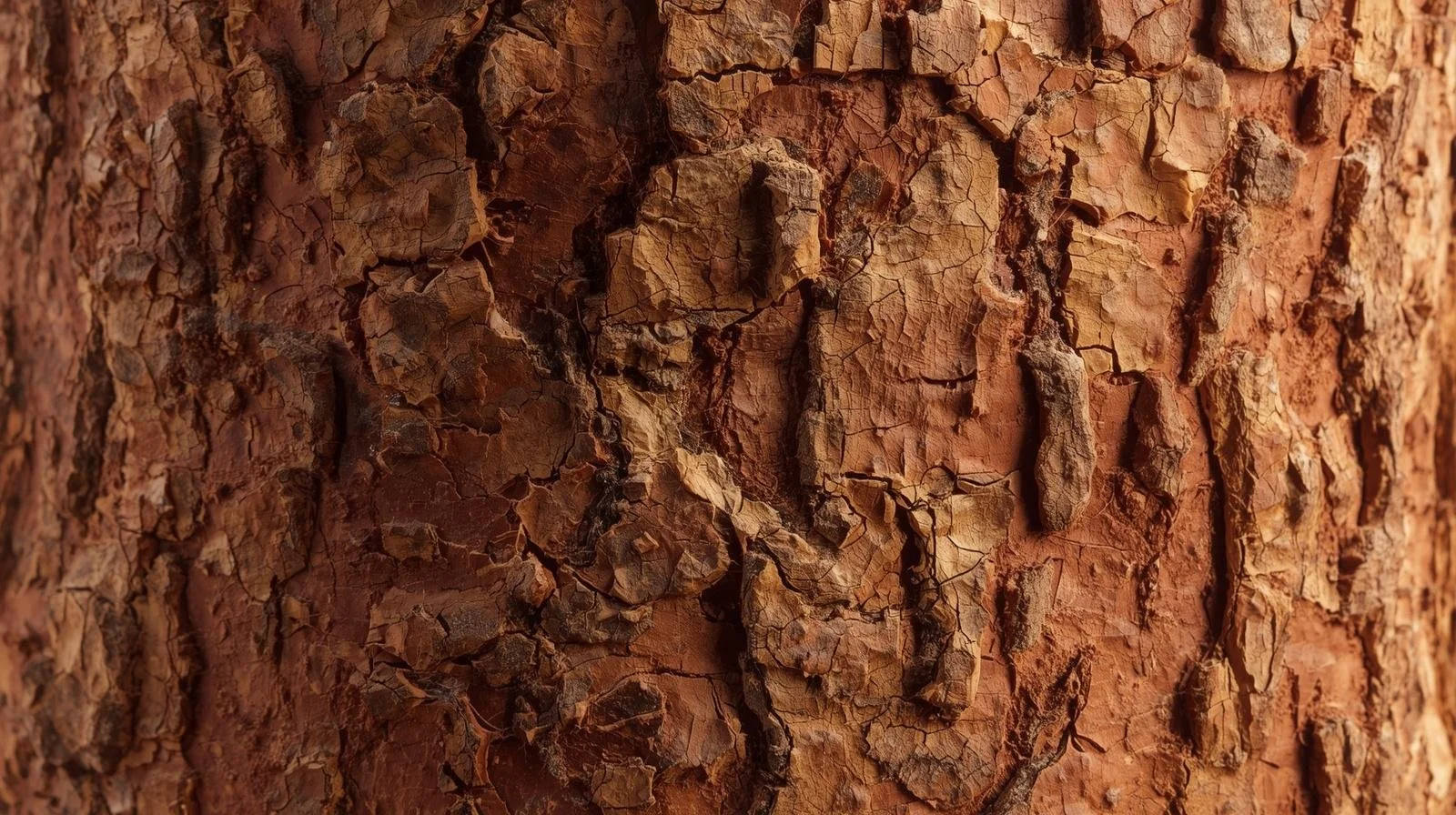
Close-up of a cork oak trunk showing the textured, spongy bark layer; the living tree remains intact, highlighting a sustainable harvest process where the bark is removed periodically without cutting the tree down and the material’s natural resin binds its cellular structure.
Take cork as an example. It is a natural material bound by its own resin, without added adhesives. Cork oak trees are de-barked on a cyclical basis without being felled, allowing a regenerative process to continue over many decades.
Or consider Glapor: recycled glass foamed into a cellular structure to create a vapour-open, durable insulating material with useful loadbearing potential in the right application. These products do not just insulate; they also bring breathability, longevity and material integrity.
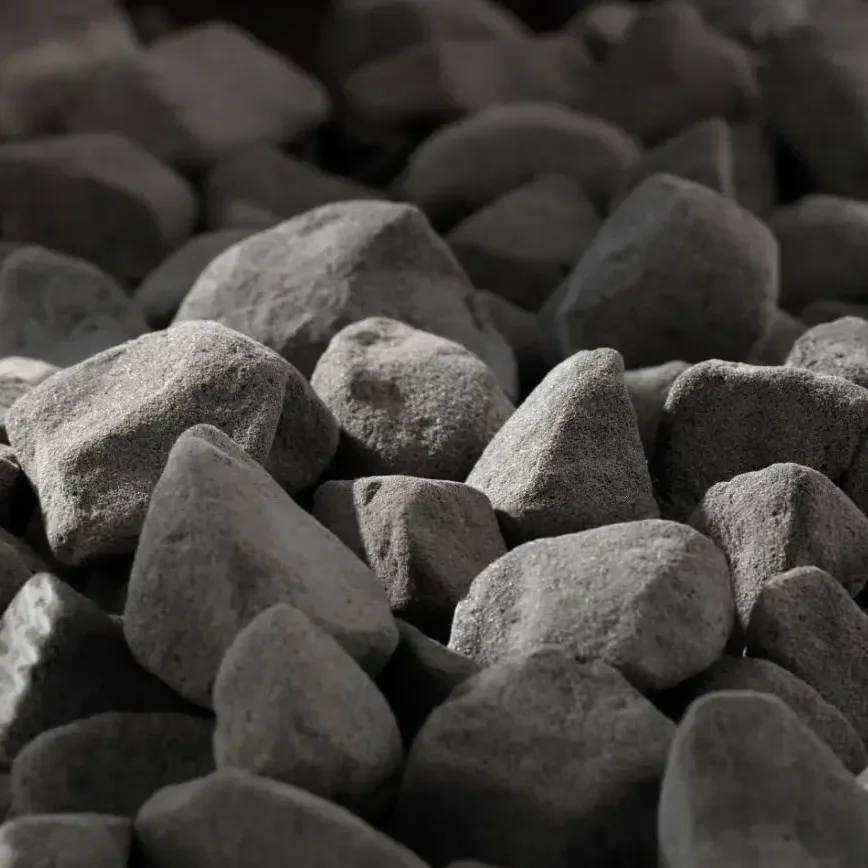
Recycled foam glass insulation used as a lightweight, insulating and capillary-breaking layer within the floor foundation build-up. Materials that do more than one job are always the goal - simpler assemblies, better performance, less to go wrong.
That wider contribution is important to us. We are not simply looking for products that can keep heat in. We are looking for materials that make sense as part of a healthy, durable and well-resolved building fabric.
Cellulose
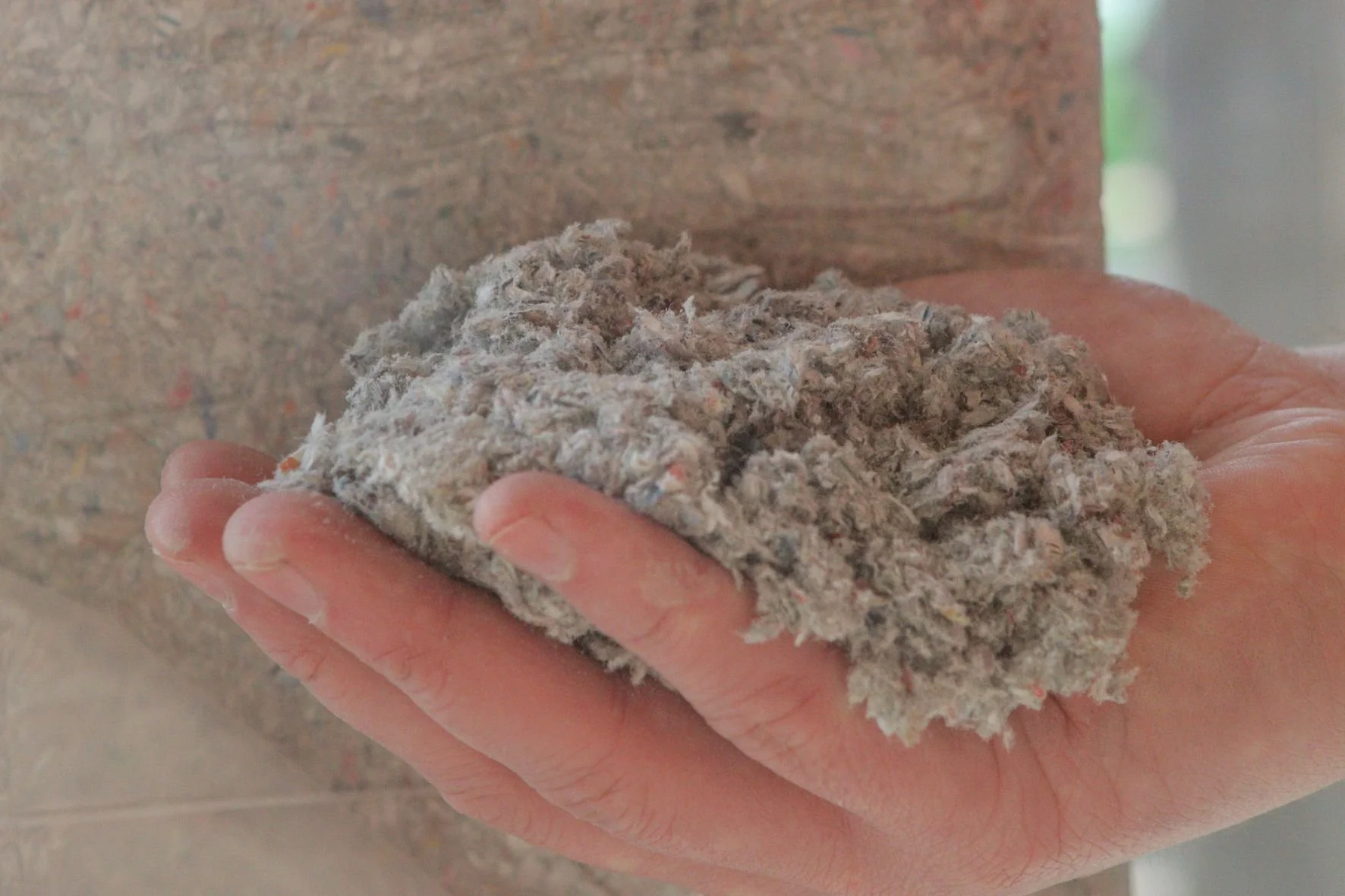
Close-up of Warmcel cellulose insulation, made from recycled newspaper. This is typically blown into the cavities from the inside, fill voids thoroughly and minimises risk of gaps in the thermal envelope.
Cellulose insulation, such as Warmcel, is made from recycled newspaper and treated for fire and pest resistance. In a Passivhaus build, once the frame is erected, the sheathing board installed, the joints sealed and the building made watertight, the insulation is typically blown into the cavities from the inside. It fills voids thoroughly, wraps around services and helps reduce the risk of gaps within the thermal envelope.
That makes it particularly well suited to timber frame construction, where continuity and coverage are critical.
It also integrates well within a Passivhaus strategy because it supports airtightness, delivers strong thermal performance and is hygroscopic. It can absorb and redistribute moisture, helping to regulate internal conditions within the structure.
There are considerations, of course. It requires careful pre-planning to ensure all cavities are accessible and properly prepared before blowing. It is not especially DIY-friendly and usually requires a specialist installer. But when detailed correctly and installed well, it performs consistently and effectively.
Woodfibre
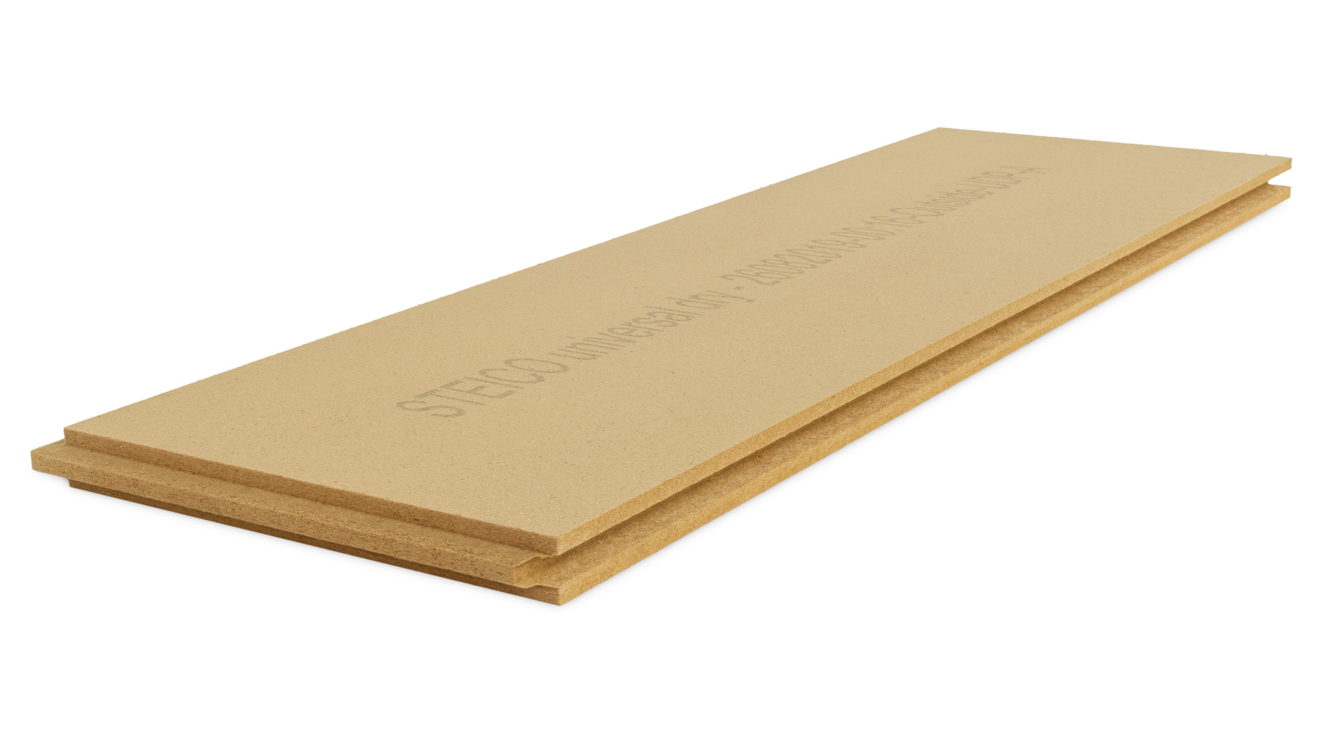
STEICOuniversal dry — a compressed woodfibre sarking, sheathing and render board with tongue‑and‑groove edges,
Woodfibre boards, such as those by Steico, are compressed wood insulation boards available in a range of formats. Some incorporate tongue-and-groove edges to help minimise gaps in the thermal envelope, and certain types can also act as structural sheathing.
In a timber frame building, wood-based insulation is about as compatible as it gets. It behaves in a similar way to the structure itself, supports vapour-open construction, and can often be plastered directly onto. Woodfibre can take on and release moisture gradually, allowing vapour to move safely from inside to outside while also contributing useful thermal mass.
That combination is powerful. It means the material is not only insulating, but also helping to moderate humidity and temperature swings within the fabric.
Installation care is still important. Tongue-and-groove edges can be damaged if mishandled, and boards need protecting during construction, particularly from prolonged exposure to wet conditions. But overall, woodfibre presents very few drawbacks and offers a well-balanced solution with very strong all-round qualities.
No one-size-fits-all answer
That said, this is not a one-size-fits-all approach.
Sometimes architectural constraints limit build-up thickness. Sometimes budgets are tight. Occasionally, reusing what already exists may be the lower-impact option overall, even if it is not what we would specify in a new build. There are also situations where a more conventional product may still have a role within a carefully considered wider strategy.
The point is not dogma. The point is to work honestly within real-world constraints and ask what will make the greatest positive difference in each case.
Retrofit projects in particular can benefit significantly from natural materials, especially where moisture management within existing fabric is critical. In those situations, vapour-open and hygroscopic materials can often offer advantages that become increasingly important over time.
There are immediate benefits to bio-based materials, even if they are not always obvious at first glance. They can contribute to healthier indoor environments, better moisture resilience, and more thoughtful end-of-life outcomes. Just as importantly, they can support better workmanship by being more intuitive and forgiving to build with.
Availability is also improving. While some bio-based products may still require more planning to source, the market is expanding and the options are becoming more viable across a wider range of projects.
Modelling matters, but execution matters more
Passivhaus modelling helps us test and balance all of this. It allows us to compare insulation options within a fully integrated framework, assessing their effect on energy demand, moisture risk and the overall build-up. It is a hugely valuable tool.
But modelling is still a tool, not a guarantee.
A performance gap can arise with any material if installation quality falls short. Even the most carefully considered design relies on good execution to become reality. Ultimately, the success of a building depends on both: good design and good building.
From foundations to structure to insulation, our approach to Passivhaus is about more than meeting a target. It is about compatibility, longevity and health, for both the building and the people who live within it.
In our next supplementary blog, we will explore how these principles apply in more depth to renovation projects, where the conversation around breathability, moisture and material choice becomes even more critical.
Written by Natalie Ross